
Food Chemistry and Nutrition
Food Chemistry and Nutrition at Aditya College of Food Technology
Overview
The Department of Food Chemistry and Nutrition at Aditya College of Food Technology, Beed, offers a dynamic curriculum that delves deep into the scientific principles behind food composition, its nutritional value, and the impact of food on health. This program equips students with essential knowledge in food science and nutrition, preparing them for careers in food quality analysis, public health nutrition, and research.
Program Highlights
- Scientific Understanding of Food Composition: Our program emphasizes the chemical properties of food, focusing on the composition, structure, and function of nutrients, as well as how they interact during food processing and digestion.
- Holistic Approach to Nutrition: The curriculum provides students with a comprehensive understanding of human nutrition, focusing on how food affects health and how it can be used to prevent or manage various health conditions.
- Research-Oriented Education: Students are encouraged to explore current trends in food chemistry and nutrition through research, enabling them to contribute to innovative solutions for improving public health and food systems.
Key Areas of Study
-
Food Composition and Biochemistry
Students explore the chemical components of food, including carbohydrates, proteins, lipids, vitamins, and minerals. The course covers food macronutrients and micronutrients, their digestion, and bioavailability. -
Nutritional Biochemistry
The program covers the biochemical processes that occur in the human body following food consumption. Students learn how nutrients are metabolized and how they influence cellular function, growth, and overall health. -
Food Processing and its Effect on Nutrient Retention
The impact of various food processing techniques on the nutrient content of foods is studied in-depth. Students learn how cooking, preservation, and packaging methods influence food quality and nutritional value. -
Human Nutrition and Dietetics
This area focuses on the role of food in disease prevention and health promotion. Topics include dietary needs across the lifespan, nutrient deficiency diseases, and the development of balanced diets for different population groups. -
Food Quality and Safety
The course examines how food chemistry is integral to food safety. Students learn about food adulteration, foodborne illnesses, and food labeling standards, alongside the role of quality assurance in the food industry.
Research and Laboratories
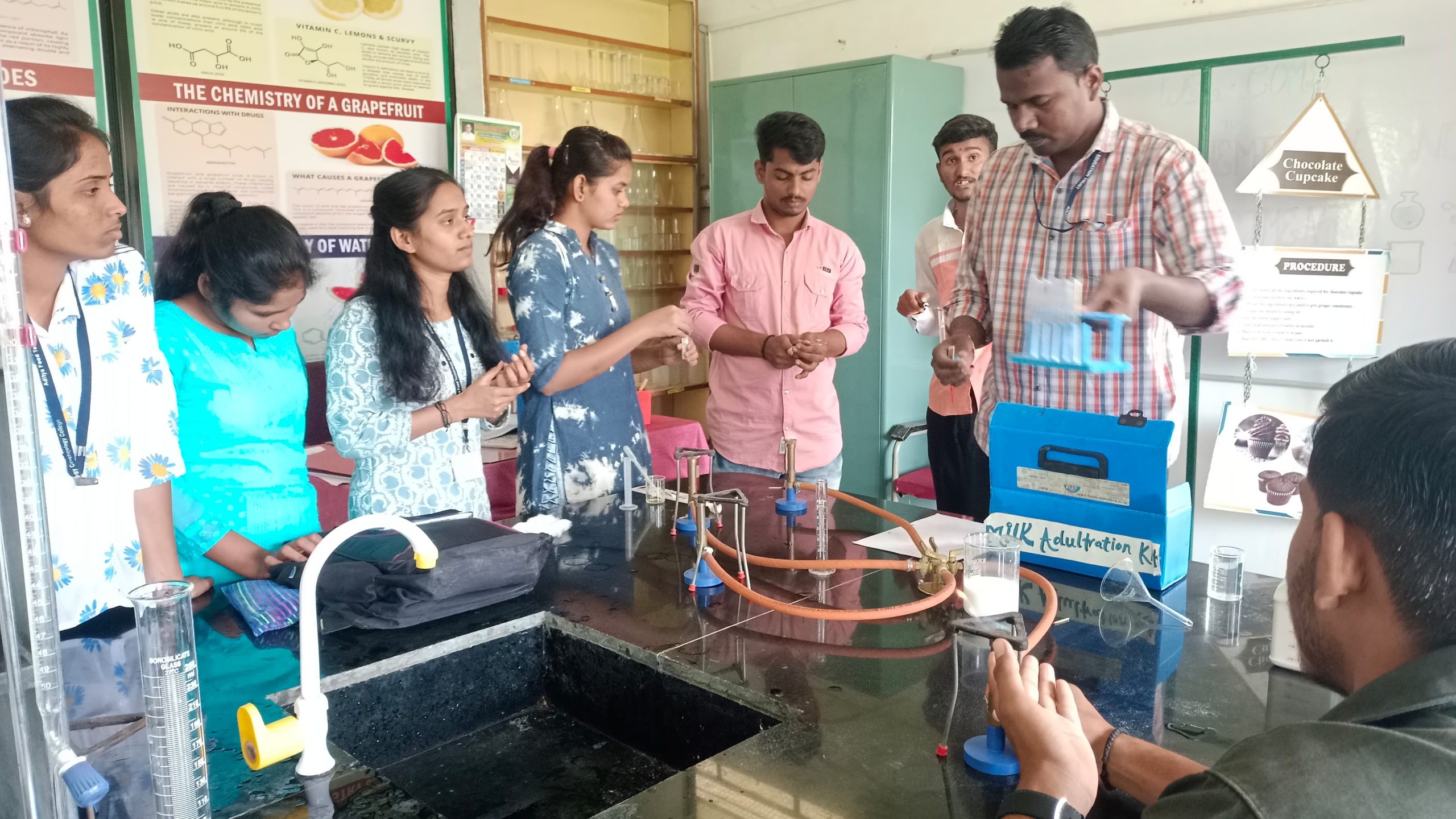
The Department of Food Chemistry and Nutrition boasts well-equipped laboratories where students can engage in hands-on experiments and research. The labs feature advanced analytical instruments for nutrient analysis, food quality testing, and biochemical experiments.
Career Opportunities
Graduates of the Food Chemistry and Nutrition program are prepared for a wide range of career opportunities in food science, nutrition, and health industries. Career paths include:
- Food Chemist: Working in food manufacturing, quality control, or product development.
- Public Health Nutritionist: Promoting nutritional health and wellness through education and community-based initiatives.
- Dietitian/Nutrition Consultant: Providing dietary advice for individuals or organizations.
- Food Safety Specialist: Ensuring food products meet safety and quality standards.
Why Choose Aditya College?
- Comprehensive Curriculum: The program integrates the latest scientific research and global advancements in food chemistry and nutrition, preparing students for emerging challenges in the food industry.
- Experienced Faculty: Our faculty members have extensive experience in food science, chemistry, and nutrition, bringing valuable insights from both academia and industry.
- Hands-On Learning: Through practical laboratory sessions and industry collaborations, students gain valuable experience in food chemistry analysis and nutritional assessment.
- Research Opportunities: Students are encouraged to engage in research activities that explore the relationship between food chemistry, nutrition, and health outcomes, contributing to the scientific community.